













[g_podcast id="10093265"]
In my show, it is important to me to offer a platform for people from very different areas and to approach the topic of gut and health from as many different angles as possible. Because in practice, this so-called multifactorial approach has definitely proven its worth.
Almost always, when people are unsuccessful in their health efforts, it is because they are excluding individual areas, such as lifestyle and inner attitude.
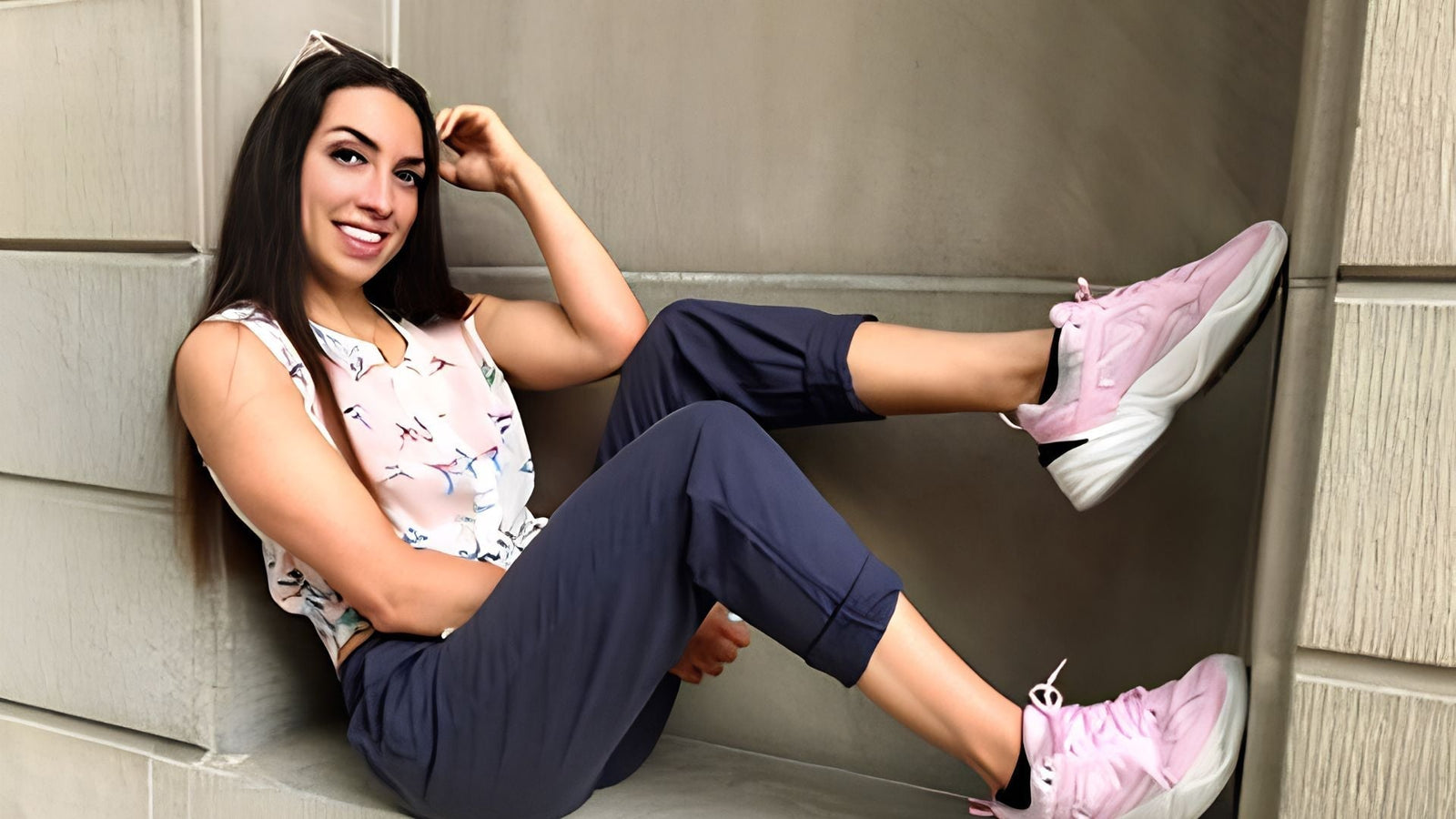
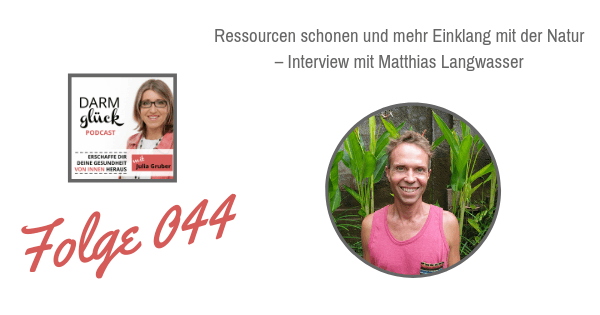
That's why I'm delighted to have Matthias Langwasser from Regenbogenkreis on the podcast today.
He is aholistic entrepreneur and specialist in health, vegan nutrition, nature conservation and living spirituality. Hiscookbook"vegan cookingt" was one of the first books in Germany on vegan nutrition, making him a pioneer and trailblazer!
We talk about the following things, among others:
Julia: I'm delighted to have Matthias Langwasser as my guest today. A very warm welcome!You are a very exciting personality! You've experienced a lot in your life, why don't you tell us a bit about how you're currently living and what your lifestyle looks like?
Matthias: I've just spent 4 months traveling in Thailand and Bali. We went to a lot of vegan restaurants because there are so many there. We were in special places where there are a lot of travelers and digital nomads and people who have an online business. And we had great experiences in nature and met exciting people, such as a specialist in EMF radiation (how to protect yourself from electrosmog) and a woman who makes raw food cakes, among others.
Me have my Regenbogenkreis online store, I do this work for the store no matter where I am. It also works wonderfully from a distance and I have combined this with getting to know new people and podcast interviews. My passion is vegan food and I've discovered an incredible number of great restaurants. I've been back for a few days now and it's fascinating how different these worlds are! I'm currently in the process of getting back into everyday life.
Living in harmony with nature is very important to you. How did you come to this?
Matthias: I got this love of nature from my father. He always went out with us when we were children. I spent a lot of time in the forest, we went hiking and skiing through the woods. Being outside was always very present. After school, I always went into the woods to our property and then dug a pond by hand for years. That was my balance to school life back then. After leaving school, it was clear to me that I didn't want to do an apprenticeship or go to university. I just wanted to do what I really wanted to do. For me, it was a kind of freedom. Leaving everything behind, no more obligations, being completely alone with myself in nature. I did it without any preparation, I just set off and didn't worry about how to live there or what there was to eat.
And where was that?
Matthias: In France and Spain. I hiked in a lot of deserted mountain areas and ate directly from nature. Mainly nuts, figs, grapes, herbs - whatever I could find. I was traveling without money. This experience had a huge impact on me.
How long was that?
Matthias: Just under 2 years.
Were there moments when you doubted?
Matthias: There were definitely those moments. I had many challenges! I had no tent with me, no money, no cooking utensils. There were situations where I was very hungry and couldn't find anything to eat. I was already very aware of vegan and organic food back then. I was always looking for abandoned vineyards - where I knew there was no spraying. Even when I passed conventional plantations where fruit was growing, I didn't pick any of it. I knew it was sprayed. There were many challenges, such as being completely wet or freezing. Sometimes I jumped out of my sleeping bag at night and jogged for 2 hours through the countryside to get warm again. But I never had this specific question in my mind that I would stop.
What influence did this experience have on the rest of your life?
Matthias: A lot of influences on many levels. One important experience was that I experienced a unity with nature - I fed directly from the earth, which created an incredible connection. And a deep faith developed. I grew up semi-religious, I was never sure if it was all true. I set out to find out whether a higher power really exists. And when I experienced that I was always looked after and always received help in difficult situations, I developed a very deep faith. That had a huge impact on me.
The environment and how we use the world's resources is still very important to you. Do you have any specific tips on what we can do to do as little harm to the environment as possible?
Matthias: One tip is to only buy organic food. I read a study where over 1000 conventional foods were examined and it was found that over 90% were contaminated with pesticides.
Another important step is a vegan diet. A lot of land is consumed by animal production, or forests are cut down for soy production, animal feed, etc.
A vegan diet is very good for us and the planet. If you use the land directly for plant cultivation, you need much less land than if you take the detour via animal food.
But there are different opinions on this. Have you ever read the book 'The cow is not a climate killer' by Anita Idel?
Matthias: I heard her give a lecture and found what she said very interesting. She co-wrote the World Agriculture Report and they found that the land needs animals to walk over it so that the grass grows properly and so that more and more humus is not lost. There are already reasons why animals belong in the world, or why it makes sense to have them together. I found the idea very exciting.
However, humus is really lost where agriculture is practiced. In other words, where the soil remains covered, you don't lose any humus.
The argument was the weight of the animals and that this has an influence on the depth of the grass roots. I think it makes sense to see everything in a slightly differentiated way and not to fall into the extreme of monoculture or factory farming.
I have been doing self-sufficiency and permaculture for a very long time and have gained a lot of experience. Permaculture is about people building natural systems that are modeled on nature. You have a greater variety and a greater quantity of healthy food in a much smaller space. For me, this is the agriculture of the future.
It's probably more time-consuming to harvest?
Matthias: In terms of cultivation, it's not complicated at all. Permaculture can be used very well for self-sufficiency. I think we should get away from the idea of producing as much as possible in as short a time as possible. In my view, it doesn't correspond to the laws of nature.
What do you think about plastic? How can we reduce it?
Matthias: In GDR times, everything was packaged in reusable packaging, and I think we need to get back to that. I think that the state should organize the use of reusable packaging again - that more glass should be used. Even all plant-based drinks are in tetrapacks. More support should be given to unpackaged stores. I believe that a company that consistently produces organic food with sustainable packaging will be very successful. For example, if a company were to start offering yogurt in reusable jars, many people would certainly buy it. Unfortunately, when I look at our government, I have zero confidence that they will do anything productive or constructive in this direction. That's why I think we have to take it into our own hands.
I think the same with regard to health. It's not going to come "from the top".
There's just no interest there. They're so entangled with large corporations, the interest just isn't there.
What else can you think of that we could do? What can you do?
Matthias: Instead of driving a car, you can get an e-bike, or I, for example, have converted my car to gas. There are more and more electric cars, although there are also different opinions on this.
I think the issue of electricity is actually a very double-edged sword. We are consuming more and more electricity and that is of course a disaster for a city when the power goes out. Things fail that you don't even think about.
In many 3rd world countries or non-European countries, environmental awareness is not as high as it is here. Some of them use plastic for all sorts of things. You can find it in nature on garbage heaps, or they burn a lot of it together. Leaves with wood and plastic, which all goes into the air and tries to pollute the air we breathe. Or when you walk along the beach and see plastic in the sand. You can directly see the effects of this. Recently a sperm whale was found with its entire stomach full of plastic. This has consequences when we produce these things. We should have this awareness and try to be as conscious as possible in all areas of life and always look for practical solutions.
Are these topics that you cover in your podcast?
Matthias: Yes, definitely, and also on YouTube. In our private lives and in our company, we pay close attention to sustainability. Our store runs on green electricity, we have green electricity ourselves. We only use recycled paper and we have compostable packaging chips. It all costs more money, it really does. But for me, there's no question about it. Otherwise I'll be where all the big corporations are!
I think it's also important that you're not the odd one out if you live this way, but that it simply becomes suitable for the masses and becomes a matter of course.
There is a nice saying: 'What can I change on my own? Half of humanity asked itself'. Someone who is really very clear about these things and changes them always has an effect. On friends, acquaintances, etc. I've already brought quite a few people to a vegan diet through my work. It simply spreads. That's why it's always worth doing something.
I don't think everyone has to become vegan, you can also say that it helps a lot if you eat more consciously. More vegetables, as little meat as possible and paying attention to how it is produced and where it comes from. I think a lot can be done if people are more conscious again. I was in a hotel recently and there was a sign on the buffet saying 'You can eat as much as you want. But please only put what you can eat on your plate'. I really liked that!
There are so many great examples of what you can do. There is a supermarket that has an extra fridge where expired goods are simply given away. The goods aren't usually bad, but the best-before date has been exceeded. That doesn't mean that the goods automatically go bad. Composting is very important to me! I did it in Thailand (where there is no waste separation) by collecting my waste in empty coconuts and then throwing the coconuts into the jungle. I am deeply reluctant to throw valuable and compostable waste into a garbage can together with plastic.
I hope that it will inspire one or two listeners to think about what they can contribute. Please tell me again what your podcast is called. I'd love my listeners to be inspired by you too. You speak from experience, you don't just preach any old thing. Things.
Matthias: That's absolutely important to me too! There are areas where I don't know my way around and I would never do a podcast about them! That's just not possible. I only report on the things that I live and where I have a lot of experience.
My podcast is called the Rainbow Circle Podcastand deals with topics relating to health and a holistic lifestyle:https://www.regenbogenkreis.de/regenbogenkreis-podcast
And you can find our website here: www.regenbogenkreis.de
We also have a lot of content on the Rainbow Circle YouTube channel: https://www.youtube.com/channel/UCkcBTQj0kstb7cjYAr4k9AA
I will definitely link that! It's really important that we address these issues and that we think together about what we can do to preserve the environment. We all just want to be happy in life and we can't do that in a broken environment.
Matthias: There are basic needs that everyone has. Everyone needs an intact natural environment, community, loving relationships, a fulfilling activity, and so on. These are just a few, but they have to be fulfilled. When I think that we live in a world where there are so many toxins in the food, air and water and that it is impossible to stay away from these toxins, it's just sad. And that's what causes disease. That's why we have to make sure that our environment becomes cleaner again and that fewer toxins get into circulation. I would like to say something else along the way. If we realize that NOW is the only real moment that exists - we can only consciously enjoy what is now. That's my inspiration for today.
If you enjoyed this episode, please do me a favor and share it in your networks, for example on Facebook or Instagram. Because the likelihood that if you like it, your friends will like it too is pretty high.
Now I recommend you subscribe to the podcast so you don't miss an episode, and if you like what you hear, I really appreciate a review on iTunes or Apple Podcast. Because those reviews also help other people find the podcast so we can spread the knowledge about gut and health more.


In my show, it is important to me to offer a platform for people from very different areas and to approach the topic of gut and health from as many different angles as possible. Because in practice, this so-called multifactorial approach has definitely proven its worth.
Almost always, when people are unsuccessful in their health efforts, it is because they are excluding individual areas, such as lifestyle and inner attitude.
That's why I'm delighted to have Matthias Langwasser from Regenbogenkreis on the podcast today.
He is aholistic entrepreneur and specialist in health, vegan nutrition, nature conservation and living spirituality. Hiscookbook"vegan cookingt" was one of the first books in Germany on vegan nutrition, making him a pioneer and trailblazer!
We talk about the following things, among others:
- How Matthias lives as a digital nomad
- How he lived in nature for 2 years after graduating from high school without having any money or food with him
- What tips Matthias has for us to better protect our environment and resources
- How he lives and implements this himself
- And: How he is making his contribution to having a positive impact in this world
Julia: I'm delighted to have Matthias Langwasser as my guest today. A very warm welcome!You are a very exciting personality! You've experienced a lot in your life, why don't you tell us a bit about how you're currently living and what your lifestyle looks like?
Matthias: I've just spent 4 months traveling in Thailand and Bali. We went to a lot of vegan restaurants because there are so many there. We were in special places where there are a lot of travelers and digital nomads and people who have an online business. And we had great experiences in nature and met exciting people, such as a specialist in EMF radiation (how to protect yourself from electrosmog) and a woman who makes raw food cakes, among others.
Me have my Regenbogenkreis online store, I do this work for the store no matter where I am. It also works wonderfully from a distance and I have combined this with getting to know new people and podcast interviews. My passion is vegan food and I've discovered an incredible number of great restaurants. I've been back for a few days now and it's fascinating how different these worlds are! I'm currently in the process of getting back into everyday life.
Without money - being alone with yourself in nature
Living in harmony with nature is very important to you. How did you come to this?
Matthias: I got this love of nature from my father. He always went out with us when we were children. I spent a lot of time in the forest, we went hiking and skiing through the woods. Being outside was always very present. After school, I always went into the woods to our property and then dug a pond by hand for years. That was my balance to school life back then. After leaving school, it was clear to me that I didn't want to do an apprenticeship or go to university. I just wanted to do what I really wanted to do. For me, it was a kind of freedom. Leaving everything behind, no more obligations, being completely alone with myself in nature. I did it without any preparation, I just set off and didn't worry about how to live there or what there was to eat.
And where was that?
Matthias: In France and Spain. I hiked in a lot of deserted mountain areas and ate directly from nature. Mainly nuts, figs, grapes, herbs - whatever I could find. I was traveling without money. This experience had a huge impact on me.
How long was that?
Matthias: Just under 2 years.
How Matthias knew how to protect himself against hunger and cold and how a deep faith developed in him
Were there moments when you doubted?
Matthias: There were definitely those moments. I had many challenges! I had no tent with me, no money, no cooking utensils. There were situations where I was very hungry and couldn't find anything to eat. I was already very aware of vegan and organic food back then. I was always looking for abandoned vineyards - where I knew there was no spraying. Even when I passed conventional plantations where fruit was growing, I didn't pick any of it. I knew it was sprayed. There were many challenges, such as being completely wet or freezing. Sometimes I jumped out of my sleeping bag at night and jogged for 2 hours through the countryside to get warm again. But I never had this specific question in my mind that I would stop.
What influence did this experience have on the rest of your life?
Matthias: A lot of influences on many levels. One important experience was that I experienced a unity with nature - I fed directly from the earth, which created an incredible connection. And a deep faith developed. I grew up semi-religious, I was never sure if it was all true. I set out to find out whether a higher power really exists. And when I experienced that I was always looked after and always received help in difficult situations, I developed a very deep faith. That had a huge impact on me.
Why permaculture and self-sufficiency are important to Matthias is
The environment and how we use the world's resources is still very important to you. Do you have any specific tips on what we can do to do as little harm to the environment as possible?
Matthias: One tip is to only buy organic food. I read a study where over 1000 conventional foods were examined and it was found that over 90% were contaminated with pesticides.
Another important step is a vegan diet. A lot of land is consumed by animal production, or forests are cut down for soy production, animal feed, etc.
A vegan diet is very good for us and the planet. If you use the land directly for plant cultivation, you need much less land than if you take the detour via animal food.
But there are different opinions on this. Have you ever read the book 'The cow is not a climate killer' by Anita Idel?
Matthias: I heard her give a lecture and found what she said very interesting. She co-wrote the World Agriculture Report and they found that the land needs animals to walk over it so that the grass grows properly and so that more and more humus is not lost. There are already reasons why animals belong in the world, or why it makes sense to have them together. I found the idea very exciting.
However, humus is really lost where agriculture is practiced. In other words, where the soil remains covered, you don't lose any humus.
The argument was the weight of the animals and that this has an influence on the depth of the grass roots. I think it makes sense to see everything in a slightly differentiated way and not to fall into the extreme of monoculture or factory farming.
I have been doing self-sufficiency and permaculture for a very long time and have gained a lot of experience. Permaculture is about people building natural systems that are modeled on nature. You have a greater variety and a greater quantity of healthy food in a much smaller space. For me, this is the agriculture of the future.
It's probably more time-consuming to harvest?
Matthias: In terms of cultivation, it's not complicated at all. Permaculture can be used very well for self-sufficiency. I think we should get away from the idea of producing as much as possible in as short a time as possible. In my view, it doesn't correspond to the laws of nature.
Valuable tips on sustainability: organic food, unpackaged stores, green electricity...
What do you think about plastic? How can we reduce it?
Matthias: In GDR times, everything was packaged in reusable packaging, and I think we need to get back to that. I think that the state should organize the use of reusable packaging again - that more glass should be used. Even all plant-based drinks are in tetrapacks. More support should be given to unpackaged stores. I believe that a company that consistently produces organic food with sustainable packaging will be very successful. For example, if a company were to start offering yogurt in reusable jars, many people would certainly buy it. Unfortunately, when I look at our government, I have zero confidence that they will do anything productive or constructive in this direction. That's why I think we have to take it into our own hands.
I think the same with regard to health. It's not going to come "from the top".
There's just no interest there. They're so entangled with large corporations, the interest just isn't there.
What else can you think of that we could do? What can you do?
Matthias: Instead of driving a car, you can get an e-bike, or I, for example, have converted my car to gas. There are more and more electric cars, although there are also different opinions on this.
I think the issue of electricity is actually a very double-edged sword. We are consuming more and more electricity and that is of course a disaster for a city when the power goes out. Things fail that you don't even think about.
In many 3rd world countries or non-European countries, environmental awareness is not as high as it is here. Some of them use plastic for all sorts of things. You can find it in nature on garbage heaps, or they burn a lot of it together. Leaves with wood and plastic, which all goes into the air and tries to pollute the air we breathe. Or when you walk along the beach and see plastic in the sand. You can directly see the effects of this. Recently a sperm whale was found with its entire stomach full of plastic. This has consequences when we produce these things. We should have this awareness and try to be as conscious as possible in all areas of life and always look for practical solutions.
Are these topics that you cover in your podcast?
Matthias: Yes, definitely, and also on YouTube. In our private lives and in our company, we pay close attention to sustainability. Our store runs on green electricity, we have green electricity ourselves. We only use recycled paper and we have compostable packaging chips. It all costs more money, it really does. But for me, there's no question about it. Otherwise I'll be where all the big corporations are!
I think it's also important that you're not the odd one out if you live this way, but that it simply becomes suitable for the masses and becomes a matter of course.
The influence of a conscious diet on people
There is a nice saying: 'What can I change on my own? Half of humanity asked itself'. Someone who is really very clear about these things and changes them always has an effect. On friends, acquaintances, etc. I've already brought quite a few people to a vegan diet through my work. It simply spreads. That's why it's always worth doing something.
I don't think everyone has to become vegan, you can also say that it helps a lot if you eat more consciously. More vegetables, as little meat as possible and paying attention to how it is produced and where it comes from. I think a lot can be done if people are more conscious again. I was in a hotel recently and there was a sign on the buffet saying 'You can eat as much as you want. But please only put what you can eat on your plate'. I really liked that!
There are so many great examples of what you can do. There is a supermarket that has an extra fridge where expired goods are simply given away. The goods aren't usually bad, but the best-before date has been exceeded. That doesn't mean that the goods automatically go bad. Composting is very important to me! I did it in Thailand (where there is no waste separation) by collecting my waste in empty coconuts and then throwing the coconuts into the jungle. I am deeply reluctant to throw valuable and compostable waste into a garbage can together with plastic.
I hope that it will inspire one or two listeners to think about what they can contribute. Please tell me again what your podcast is called. I'd love my listeners to be inspired by you too. You speak from experience, you don't just preach any old thing. Things.
Matthias: That's absolutely important to me too! There are areas where I don't know my way around and I would never do a podcast about them! That's just not possible. I only report on the things that I live and where I have a lot of experience.
My podcast is called the Rainbow Circle Podcastand deals with topics relating to health and a holistic lifestyle:https://www.regenbogenkreis.de/regenbogenkreis-podcast
And you can find our website here: www.regenbogenkreis.de
We also have a lot of content on the Rainbow Circle YouTube channel: https://www.youtube.com/channel/UCkcBTQj0kstb7cjYAr4k9AA
Why it is so important to live in the NOW
I will definitely link that! It's really important that we address these issues and that we think together about what we can do to preserve the environment. We all just want to be happy in life and we can't do that in a broken environment.
Matthias: There are basic needs that everyone has. Everyone needs an intact natural environment, community, loving relationships, a fulfilling activity, and so on. These are just a few, but they have to be fulfilled. When I think that we live in a world where there are so many toxins in the food, air and water and that it is impossible to stay away from these toxins, it's just sad. And that's what causes disease. That's why we have to make sure that our environment becomes cleaner again and that fewer toxins get into circulation. I would like to say something else along the way. If we realize that NOW is the only real moment that exists - we can only consciously enjoy what is now. That's my inspiration for today.
If you enjoyed this episode, please do me a favor and share it in your networks, for example on Facebook or Instagram. Because the likelihood that if you like it, your friends will like it too is pretty high.
Now I recommend you subscribe to the podcast so you don't miss an episode, and if you like what you hear, I really appreciate a review on iTunes or Apple Podcast. Because those reviews also help other people find the podcast so we can spread the knowledge about gut and health more.