
















[g_podcast id="10911083"]
In this episode, I interviewed a very exciting guest, Gilbert Fisch, President of the Board of Trustees at Summits4Hope. If you want to find out how a man who didn't support any aid organization until he was 58 years old and always threw donation letters straight into the trash can, how this man came to found an aid organization after his retirement and now finances projects and collects donations in the most original and creative way, then you should listen to this episode!
You'll find out how Gilbert had a crisis of heart after his early retirement and then decided not just to donate some of his money, but to get actively involved in fundraising for humanitarian projects in the areas of water, education and refuge.
His aim is to raise money through sporting events and other sporting activities. Gilbert covers the administrative costs of the projects out of his own pocket, which means that 100% of the donations actually end up in the aid projects.
I am delighted to have Gilbert Fisch as my guest. Hello!
Gilbert: Hello Julia!
We've known each other for a relatively long time - you used to be one of our customers and took micronutrients from us and did analyses. Why do you think health is so important in life?
Gilbert: Everything is nothing without health! It's quite simple. If you can go through life in good health, that's the greatest blessing there is. Most of the time, you only really realize this when you're no longer healthy. As a society, we do far too little to be healthy.
Have you experienced periods in your life when you weren't doing so well?
Gilbert: Oh yes, absolutely! I have to say that I've been lucky in life so far. I don't have a single allergy that I know of, neither hay fever nor food allergies. That's an incredible amount! I think that's because I was born in 1957 and ate a lot of dirt, climbed trees, fell off things etc. when I was young. I wasn't vaccinated either. A tricky subject! I went through measles, mumps and rubella. I had a few accidents that weren't serious.
In the course of my life, when I was trying to optimize myself athletically, I fell into the familiar traps. These were the imaginary problems and at some point I had the feeling that I had a gluten intolerance. I was still tired 2 hours after breakfast and then I did some research and found 2-3 questionable advisors who said 'Get rid of that stuff, it's all poison! It's now genetically modified!'.
Then you start to restrict yourself here and there. Luckily, with your help, I found out that I don't have a gluten intolerance or any other nasties. I'm now a happy bread eater again - in moderation!
Although it has to be said: there are actually people who don't get on well with wheat, it's an individual thing.
That's why it's important to find out where the problem lies. Depending on this, you can consult a suitable analysis and then you know where the problem lies.
Gilbert: The problem today is that as soon as you enter a gym, the trainer starts chatting you up and then the self-appointed nutritionist. And then it's on go to
When it comes to nutrition, many people feel that they know a lot about it. That's not always the case, but at the end of the day you've found a way to feel good today. Right?
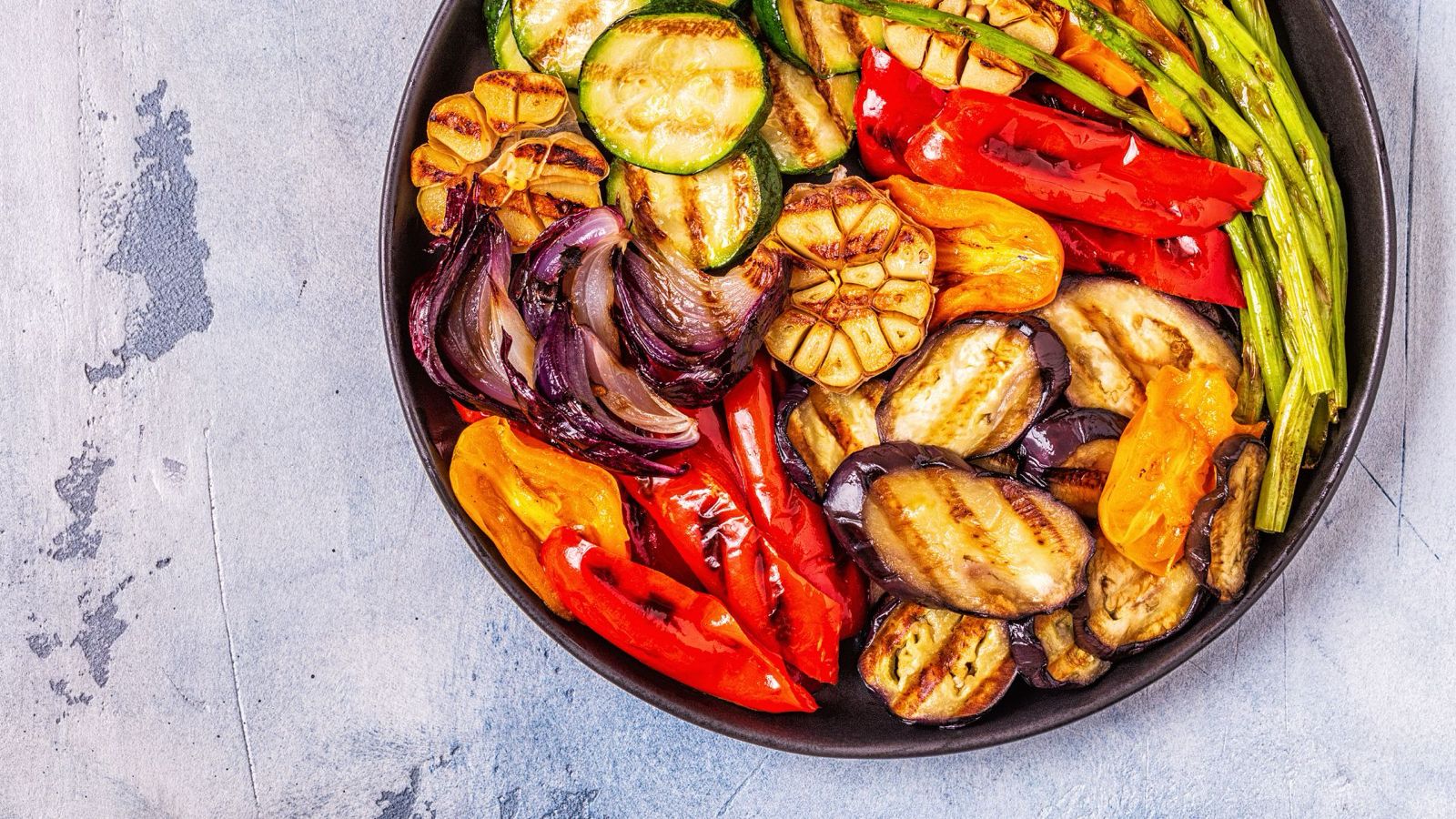
Gilbert: Yes, I do something very simple! I buy seasonal, regional and, if possible, organic. I was a typical avocado eater for a long time, an avocado every day - I don't do that anymore, maybe once a month. I really try to eat products that come from the local area. Where I know where it comes from. I go to a market, I have my stalls there. I know where and how they grow their produce and that they handle it with care.
I'm not vegetarian or vegan. I eat a moderate amount of meat, but it's all from species-appropriate husbandry. There are things I love! I love Turkish yogurt, the fattest of all yogurts! I don't eat fruit yogurts because they are full of sugar. And as I said, it's the measure that has a lot to do with my well-being. Everything you consume a lot of has a negative effect at some point. I love root vegetables. If you take a look at what's available here in winter, you won't get bored.
You are someone who loves to cook. We've been your guest before. You offer events where you cook for people in your home. Let's talk a bit about why I invited you in the first place. You are very committed to projects in Africa, where the main issues are education, water and refuge. Why Africa?
Gilbert: I'm not one of those people who go on vacation to Africa or India and then one day stupidly end up in an area where poverty is really dragging you down and then come home and think to myself: 'For God's sake, I've seen the poverty in Africa, I want to do something about it now!
My approach was: I had a vision. I wanted to bring sporty people together to do sport and make a certain contribution as part of these sporting activities. I wanted to use this contribution to support projects that were primarily aimed at children. Children are the most innocent of all beings. Whether you are born in a poor region or in a millionaire's villa on the north coast is beyond your control. It's just luck or bad luck.
When you see how these children who come from these backgrounds end up innocently on the street because the parents and the whole community can no longer afford this child because there is no food or anything else and they are virtually abandoned, I reach a point where I want to make a contribution.
The themes of water, education and refuge are based on the fact that I have a very strong connection to water. I love water as an element to move around in. Water is my absolute favorite drink. I then read about the global water crisis, that over 700,000,000 people are without access to clean water, and very quickly realized that water and education are directly linked.
It's no good building a school in a village if they don't have access to clean water. Then nobody goes to school because they need all the time in the day to fetch water. The dirty water they end up drinking makes them sick. First water, then education!
The idea of refuge came about because I said: 'I want to go there spontaneously and say - ok, I'll help now'. I'm not interested in individual fates. Last year, a friend of mine (he does Himalayan tracking) went to Nepal. He went to a village where people had really been forgotten after the big earthquake. I asked him what the village needed. He said small medicine chests, blankets, exercise books, etc. Then we cycled with 15 people on a Saturday and collected CHF 2,000 and then he took the money with him and bought everything in Kathmandu. He went to the village and distributed everything.
The nice story is actually that one of his long-time friends - whose father-in-law had an accident and had to go to hospital, but didn't have the money to pay for the hospital. He had to sell his cow and we bought him a new, pregnant cow. These are the things where you say: 'how can a cow change a life'? You should just go and say: 'I'm going to open my wallet and give something'. Whether it's sustainable, whether it makes sense in the long term is completely irrelevant. There's a need and they're just going to help for a short time. That's the approach.
To explain this, you founded your own aid organization. And the specialty, so to speak, is that everything you donate actually goes to the project because you bear the administrative costs yourself.
Gilbert: I worked an insane amount in the first half of my life. I was lucky enough to be successful. At the beginning of the 2000s, I was able to sell the company I had built up. I got quite a lot of money for it and then dedicated myself to the sport of triathlon for the first 10 years. I thought it was really cool to travel the world. However, I had to stop for health reasons and really had this crisis of the senses.
When everything that's fun is taken away from you and you don't have a plan B, there are simply problems. It was clear to me that I was at a point in my life where I said 'It's not about me now! I didn't support a single aid organization until 58. All the donation emails ended up in the bin unopened.
I asked myself: what can I do, where can I make a difference? And I failed at first because I always had the feeling that it was far too small and wouldn't make a difference. Until I said: 'Now I'll help one person and if that works, I'll help a second and then a third and then we'll see where it goes'.
I could have taken part of my assets and donated a certain amount to an organization every year. That might have made me feel a bit better about myself, but cognitively and employment-wise it wouldn't have gotten me anywhere. I wanted to do something again that challenged me, where I could get involved, where I could use my talents as a businessman.
Then I decided to set up this foundation with a clear vision. I then told myself that I would invest CHF 50,000 every year as foundation capital - that was effectively my working capital. And at the end of the year, I wanted to have generated at least CHF 3 in donations from every franc I invested and then donated this sum to aid projects. I finance my foundation myself and of course work 100% pro bono for it. That's why I have 100% transparency. When I go on a trip to Africa, it comes out of my own pocket.
What I think is really great is that you also travel to these countries and donate money to aid projects. look at the projects. It's not like you're choosing things from your desk. You really look at how it's used. When we had dinner with you, you told us that you also look at what they do with the money you donate.
Gilbert: I realized very quickly that my talent really lies in fundraising. And that it's absolutely vital to work with the right partners, locally in the relevant countries. Who also know how to use the money properly. I have teamed up with 2 organizations. On the water side, there is Water for Water in Lucerne and We care 4 in Thalwil, with whom I carry out these educational projects. We care 4, for example, has been supporting a project for street children for 15 or 16 years, and all the relationships are there, the control instruments are there, etc. And they also work according to the 100% principle. And they also work according to the principle that 100% of the money goes to the projects, they finance the costs from other sources.
That is the reason why I am now mainly working in East Africa. I work in Zambia, Mozambique and Kenya. But that has nothing to do with the fact that I chose these places selectively. It has to do with the fact that my partners work there and have these long-standing relationships. That makes it a bit easier in terms of travel.
If I were working in Nigeria, Tunisia, South Africa and perhaps Madagascar, it would be pretty much impossible to visit them again and again. Even on my current trip to Maputo, it wasn't easy with the logistics or getting there.
Is there anything that particularly impressed you on this trip? Or any experience that still sticks in your mind?
Gilbert: These trips are emotional rollercoaster rides. Sometimes every 5 minutes. You have to imagine it like this: of course you visit projects where you have made a difference. In Maputo, we visited three schools, two of which we had already financed water projects for. We had financed one project in 2018 and the second project is now being tackled with the money from 2019. It was a bit depressing because you could see that the old infrastructure wasn't working at all. But you knew something was being done, things were getting better.
And then we went to a third school, where 3,000 children go to school. This school has a tap with fresh water! For 3000 children! It comes out of the ground somewhere in the school grounds and these children don't even know how to use water. Of course they go and take a sip of water, but there is no hand hygiene or anything like that. The toilet facilities were in such a catastrophic state. There were four toilet complexes in four school buildings. Two of them were locked because they were so broken and the other two - I went in, I could only stay in for about 15 seconds, absolute epidemic risk! You really can't imagine that. It's simply inhumane. And when you see that, you say: 'My God, we have to do something!'
That's one of the stories in these schools. Then we always go to the slums and the most depressing slums for me were in Nairobi. There is no space there, they are building incredibly densely. As a result, thousands of people move around in these narrow alleyways. These are all countries where the population share of children under the age of 15 is enormously high. In Mozambique, 48% of the population is under 15 years old!
Then you see these children on the street and you see this lack of prospects. We were invited to the home of a course participant from a new project that we are supporting. Her home was a 10m² corrugated iron hut with a bed in it, a sofa, a gas stove and what she needed to wear under the blanket. She lived there with her husband and child and now she is 'unfortunately' pregnant again. There will soon be four of them living there. You go there and say: 'Oh God! What we are doing is not enough'!
And then you have to turn it around and say: 'Yes, but for the 20 people we are giving an educational opportunity to, we are God's salvation for them.
Then on the one hand you take all this frustration with you and on the other hand it motivates you to carry on.
Above all, I think that with education you also enable people to pass it on. That has a ripple effect. If you help one person who can later help others because they are better off, you haven't helped one person in the end, but hundreds of people.
Gilbert: And what is also very important and that are really approaches that are very plausible. For example, when we build sanitary facilities in schools, it is absolutely crucial that we build gender-appropriate toilets. So that when girls are menstruating, they have a protected environment to deal with this issue, which is otherwise difficult enough.
If girls stay away from school at 12 or 13 because they don't dare to go to school with their menstrual cycle, they stay at home and miss school. This goes on for six months, then they miss so much class that they fail the exams, then they drop out of the system and the result is that they are pregnant again at 15 and everything starts all over again.
If you want to change the economy in these countries, it is advisable to do a lot of things for women. Women have much more power to change a society. That is a very important approach! Even if you support them in some other way - it's a thousand times better to give a woman a microloan so that she can grow vegetables than a man. Women are changing our society.
That's interesting to hear and it's good when you recognize such trends and act accordingly. I don't want to make it too political, but at the end of the day I think it makes sense to help the local people in the countries so that they can and want to stay there and don't feel they have to flee to the West.
Gilbert: Yes, that only happens if the prospects are tempting enough for you to make it out of this cycle on your own.
What impresses me so much about you is, of course, the marketing knowledge and creativity you bring to how you spread the word about your projects. And what stuck in my mind the most was your challenge where you sat down in Lake Zurich in the coldest weather and people could donate money and the more money you donated, the longer you had to stay in the lake. You are a very creative person! What do you currently have up your sleeve? How can people support you if they would like to give money for your projects?
Gilbert: I'm currently preparing for the Tortour. This is the longest one-day cycle race around Switzerland. But don't worry, I'm not doing the original Tortour. I'm not riding 1000 km, but there's another distance called the Sprint. It is ONLY 390 km long. I have now also expanded a campaign. It's called "Empower Women - The Battle for Equal Opportunity".
We'll be at the start with three teams of three women and three solo men. Three women and one man will always form a team and the aim is to see who can cover the distance the fastest. The last 390 km will be sold for CHF 5 each. We will use this money to support an educational program in Nairobi, which I have just visited.
Young mothers are trained to start a small business. But we will also use the other half of the money to support an integration project for refugee women with children, which was founded here in Zurich, where the aim is to integrate these women into our society as well and as quickly as possible.
And this time I'm selling my training sessions. People can buy kilometers from me, primarily for the Tortour - CHF 5 per km, and I thank them afterwards with a video, so that I can personalize a video for each donor. I ride a route that is recorded. I make a video about it by inserting pictures that I have taken along the way or where I think of something funny to pimp this video and put it online to thank them for their support.
I only ride 390 km but I have sold 800 km in the meantime! You can see all the videos on my Facebook page. And then I have a signature event on August 31st called "Neverest". It's a multi-sport event where we run, swim, cycle and much more. Everyone for as long as they want! We have a barbecue, we have a concert. At this event, I'll be hosting with a friend of mine. We've come up with an idea: we'll each do a lap on our bike route and run around the lake once. The idea is that we can throw stones into a rucksack, into a saddle bag. One stone costs CHF 10.
So the best thing is to follow you on Facebook. Not everyone can come to the lake, the podcast is also heard in Germany and Austria. People can get in touch with you via social media and support you virtually and follow you on video.
I think it's a good thing if you want to be sure that the donations actually go to a project and that there is someone behind it who really takes care of it with their own time so that the projects are completed.
I think that's another thing. When you donate money, you want to donate it somewhere where a project will be completed. You can be very sure of that! I mentioned at the beginning of the interview that there is the possibility of having dinner at your place. Does that still exist?
Gilbert: Yes, it still exists! I have three fall dates online. You can find them on my website under: SoulFoodFriday. Two of them are almost fully booked, but there are still quite a few places available for one. There will be one last 'Soul Food Friday' in November before we continue with Christmas dinner in December. The will not take place at my home, but in the kitchen of a friend of mine who owns a catering company and used to work at my agency. I have capacity for about 22-23 people. The date will be announced online in the next few weeks. You can also put your name on my list and I'll let you know a week before it goes online.
I can highly recommend it! Firstly, Gilbert cooks very well and secondly, he is a very good host! There were very nice people at the table and we had a great time. The principle is that people come to eat with you, you cook and at the end you can pay what you want. What they pay goes towards one of your projects. Right?
Gilbert: I've changed the principle a bit. Now it's a flat rate of CHF 100. You get a 3-course menu with wine accompaniment plus an aperitif. Of course, you can also pay more. These evenings are very enriching because people meet who have never seen each other before. At the beginning, I felt a bit like I had to host the evening. That's not necessary at all! When people go home happy because they've eaten well and had a good time, that's the best reward for me!
I also liked it so much because you know that the money is actually going to someone else. Back then, the food you cooked with was sponsored. Now some of the money is not used for the food. That, too, goes 100% to one of the projects.
Gilbert: You have to imagine it like this: I organize 12-13 evenings a year. The total money is always around CHF 10,000. That's enough to buy food for 40 children in an orphanage in Kenya for a whole year. And these children eat mountains! You can't imagine how much the thin children can eat! They are well nourished. It's so much fun to see how you can bring joy to people here and then use it to create something vital.
Beautiful! And if someone wants to donate money just like that, that's fine too, of course. Right?
Gilbert: I always try to persuade people to come to the events. Anyone who can't come and still wants to support us can of course make a local donation.
What is the name of your website?
Gilbert: summits4hope.ch
You said earlier that you had never made a donation in your life until 58.
Finally, would you like to say in 2-3 sentences what it has done to you that you have now started to immerse yourself in this world? What has it changed in your life?
Gilbert: Anyone who lives their life without seeing any meaning is living a poor life.
I can only say to everyone again and again: Make something meaningful out of your life! Listen to yourself. Listen with your heart.
Many people ask me how I found out who I want to help. If it resonates here (in the heart), it was right. It's a huge topic in our society today, people want to get out of their boring jobs and are looking for a new sense of purpose. They want to make a difference. I was lucky enough to be able to decide freely how I wanted to do this. Not everyone can do that, but the process is the same. You have to approach it, you have to listen to yourself, you have to deal with a lot of issues, you have to find out what it's for. heart beats. And once you've found it, you should pursue it - even if it's difficult at first and involves certain sacrifices. The reward at the end is priceless!
These are the links to the episode:
Gilbert Fisch's website: https://www.summits4hope.ch
Gilbert's Facebook page: https://www.facebook.com/summits4hope/
Now I recommend you subscribe to the podcast so you never miss an episode, and if you like what you hear, I'd really appreciate a review on iTunes or Apple Podcast. Because these reviews also help other people to find the podcast so that we can spread the knowledge about gut and health more.


In this episode, I interviewed a very exciting guest, Gilbert Fisch, President of the Board of Trustees at Summits4Hope. If you want to find out how a man who didn't support any aid organization until he was 58 years old and always threw donation letters straight into the trash can, how this man came to found an aid organization after his retirement and now finances projects and collects donations in the most original and creative way, then you should listen to this episode!
You'll find out how Gilbert had a crisis of heart after his early retirement and then decided not just to donate some of his money, but to get actively involved in fundraising for humanitarian projects in the areas of water, education and refuge.
His aim is to raise money through sporting events and other sporting activities. Gilbert covers the administrative costs of the projects out of his own pocket, which means that 100% of the donations actually end up in the aid projects.
Health is the greatest blessing!
I am delighted to have Gilbert Fisch as my guest. Hello!
Gilbert: Hello Julia!
We've known each other for a relatively long time - you used to be one of our customers and took micronutrients from us and did analyses. Why do you think health is so important in life?
Gilbert: Everything is nothing without health! It's quite simple. If you can go through life in good health, that's the greatest blessing there is. Most of the time, you only really realize this when you're no longer healthy. As a society, we do far too little to be healthy.
Have you experienced periods in your life when you weren't doing so well?
Gilbert: Oh yes, absolutely! I have to say that I've been lucky in life so far. I don't have a single allergy that I know of, neither hay fever nor food allergies. That's an incredible amount! I think that's because I was born in 1957 and ate a lot of dirt, climbed trees, fell off things etc. when I was young. I wasn't vaccinated either. A tricky subject! I went through measles, mumps and rubella. I had a few accidents that weren't serious.
In the course of my life, when I was trying to optimize myself athletically, I fell into the familiar traps. These were the imaginary problems and at some point I had the feeling that I had a gluten intolerance. I was still tired 2 hours after breakfast and then I did some research and found 2-3 questionable advisors who said 'Get rid of that stuff, it's all poison! It's now genetically modified!'.
Then you start to restrict yourself here and there. Luckily, with your help, I found out that I don't have a gluten intolerance or any other nasties. I'm now a happy bread eater again - in moderation!
Buy seasonal and regional food!
Although it has to be said: there are actually people who don't get on well with wheat, it's an individual thing.
That's why it's important to find out where the problem lies. Depending on this, you can consult a suitable analysis and then you know where the problem lies.
Gilbert: The problem today is that as soon as you enter a gym, the trainer starts chatting you up and then the self-appointed nutritionist. And then it's on go to
When it comes to nutrition, many people feel that they know a lot about it. That's not always the case, but at the end of the day you've found a way to feel good today. Right?
Gilbert: Yes, I do something very simple! I buy seasonal, regional and, if possible, organic. I was a typical avocado eater for a long time, an avocado every day - I don't do that anymore, maybe once a month. I really try to eat products that come from the local area. Where I know where it comes from. I go to a market, I have my stalls there. I know where and how they grow their produce and that they handle it with care.
I'm not vegetarian or vegan. I eat a moderate amount of meat, but it's all from species-appropriate husbandry. There are things I love! I love Turkish yogurt, the fattest of all yogurts! I don't eat fruit yogurts because they are full of sugar. And as I said, it's the measure that has a lot to do with my well-being. Everything you consume a lot of has a negative effect at some point. I love root vegetables. If you take a look at what's available here in winter, you won't get bored.
Gilbert's vision: supporting children's projects under the motto: first water, then education
You are someone who loves to cook. We've been your guest before. You offer events where you cook for people in your home. Let's talk a bit about why I invited you in the first place. You are very committed to projects in Africa, where the main issues are education, water and refuge. Why Africa?
Gilbert: I'm not one of those people who go on vacation to Africa or India and then one day stupidly end up in an area where poverty is really dragging you down and then come home and think to myself: 'For God's sake, I've seen the poverty in Africa, I want to do something about it now!
My approach was: I had a vision. I wanted to bring sporty people together to do sport and make a certain contribution as part of these sporting activities. I wanted to use this contribution to support projects that were primarily aimed at children. Children are the most innocent of all beings. Whether you are born in a poor region or in a millionaire's villa on the north coast is beyond your control. It's just luck or bad luck.
When you see how these children who come from these backgrounds end up innocently on the street because the parents and the whole community can no longer afford this child because there is no food or anything else and they are virtually abandoned, I reach a point where I want to make a contribution.
The themes of water, education and refuge are based on the fact that I have a very strong connection to water. I love water as an element to move around in. Water is my absolute favorite drink. I then read about the global water crisis, that over 700,000,000 people are without access to clean water, and very quickly realized that water and education are directly linked.
It's no good building a school in a village if they don't have access to clean water. Then nobody goes to school because they need all the time in the day to fetch water. The dirty water they end up drinking makes them sick. First water, then education!
How Gilbert came to found his own aid organization through various fundraising campaigns
The idea of refuge came about because I said: 'I want to go there spontaneously and say - ok, I'll help now'. I'm not interested in individual fates. Last year, a friend of mine (he does Himalayan tracking) went to Nepal. He went to a village where people had really been forgotten after the big earthquake. I asked him what the village needed. He said small medicine chests, blankets, exercise books, etc. Then we cycled with 15 people on a Saturday and collected CHF 2,000 and then he took the money with him and bought everything in Kathmandu. He went to the village and distributed everything.
The nice story is actually that one of his long-time friends - whose father-in-law had an accident and had to go to hospital, but didn't have the money to pay for the hospital. He had to sell his cow and we bought him a new, pregnant cow. These are the things where you say: 'how can a cow change a life'? You should just go and say: 'I'm going to open my wallet and give something'. Whether it's sustainable, whether it makes sense in the long term is completely irrelevant. There's a need and they're just going to help for a short time. That's the approach.
"If everything you enjoy is taken away from you and you don't have a plan B, problems simply arise.
"To explain this, you founded your own aid organization. And the specialty, so to speak, is that everything you donate actually goes to the project because you bear the administrative costs yourself.
Gilbert: I worked an insane amount in the first half of my life. I was lucky enough to be successful. At the beginning of the 2000s, I was able to sell the company I had built up. I got quite a lot of money for it and then dedicated myself to the sport of triathlon for the first 10 years. I thought it was really cool to travel the world. However, I had to stop for health reasons and really had this crisis of the senses.
When everything that's fun is taken away from you and you don't have a plan B, there are simply problems. It was clear to me that I was at a point in my life where I said 'It's not about me now! I didn't support a single aid organization until 58. All the donation emails ended up in the bin unopened.
I asked myself: what can I do, where can I make a difference? And I failed at first because I always had the feeling that it was far too small and wouldn't make a difference. Until I said: 'Now I'll help one person and if that works, I'll help a second and then a third and then we'll see where it goes'.
I could have taken part of my assets and donated a certain amount to an organization every year. That might have made me feel a bit better about myself, but cognitively and employment-wise it wouldn't have gotten me anywhere. I wanted to do something again that challenged me, where I could get involved, where I could use my talents as a businessman.
Then I decided to set up this foundation with a clear vision. I then told myself that I would invest CHF 50,000 every year as foundation capital - that was effectively my working capital. And at the end of the year, I wanted to have generated at least CHF 3 in donations from every franc I invested and then donated this sum to aid projects. I finance my foundation myself and of course work 100% pro bono for it. That's why I have 100% transparency. When I go on a trip to Africa, it comes out of my own pocket.
What I think is really great is that you also travel to these countries and donate money to aid projects. look at the projects. It's not like you're choosing things from your desk. You really look at how it's used. When we had dinner with you, you told us that you also look at what they do with the money you donate.
Gilbert: I realized very quickly that my talent really lies in fundraising. And that it's absolutely vital to work with the right partners, locally in the relevant countries. Who also know how to use the money properly. I have teamed up with 2 organizations. On the water side, there is Water for Water in Lucerne and We care 4 in Thalwil, with whom I carry out these educational projects. We care 4, for example, has been supporting a project for street children for 15 or 16 years, and all the relationships are there, the control instruments are there, etc. And they also work according to the 100% principle. And they also work according to the principle that 100% of the money goes to the projects, they finance the costs from other sources.
That is the reason why I am now mainly working in East Africa. I work in Zambia, Mozambique and Kenya. But that has nothing to do with the fact that I chose these places selectively. It has to do with the fact that my partners work there and have these long-standing relationships. That makes it a bit easier in terms of travel.
If I were working in Nigeria, Tunisia, South Africa and perhaps Madagascar, it would be pretty much impossible to visit them again and again. Even on my current trip to Maputo, it wasn't easy with the logistics or getting there.
A few moving impressions from East Africa and how to turn frustration into motivation
Is there anything that particularly impressed you on this trip? Or any experience that still sticks in your mind?
Gilbert: These trips are emotional rollercoaster rides. Sometimes every 5 minutes. You have to imagine it like this: of course you visit projects where you have made a difference. In Maputo, we visited three schools, two of which we had already financed water projects for. We had financed one project in 2018 and the second project is now being tackled with the money from 2019. It was a bit depressing because you could see that the old infrastructure wasn't working at all. But you knew something was being done, things were getting better.
And then we went to a third school, where 3,000 children go to school. This school has a tap with fresh water! For 3000 children! It comes out of the ground somewhere in the school grounds and these children don't even know how to use water. Of course they go and take a sip of water, but there is no hand hygiene or anything like that. The toilet facilities were in such a catastrophic state. There were four toilet complexes in four school buildings. Two of them were locked because they were so broken and the other two - I went in, I could only stay in for about 15 seconds, absolute epidemic risk! You really can't imagine that. It's simply inhumane. And when you see that, you say: 'My God, we have to do something!'
That's one of the stories in these schools. Then we always go to the slums and the most depressing slums for me were in Nairobi. There is no space there, they are building incredibly densely. As a result, thousands of people move around in these narrow alleyways. These are all countries where the population share of children under the age of 15 is enormously high. In Mozambique, 48% of the population is under 15 years old!
Then you see these children on the street and you see this lack of prospects. We were invited to the home of a course participant from a new project that we are supporting. Her home was a 10m² corrugated iron hut with a bed in it, a sofa, a gas stove and what she needed to wear under the blanket. She lived there with her husband and child and now she is 'unfortunately' pregnant again. There will soon be four of them living there. You go there and say: 'Oh God! What we are doing is not enough'!
And then you have to turn it around and say: 'Yes, but for the 20 people we are giving an educational opportunity to, we are God's salvation for them.
Then on the one hand you take all this frustration with you and on the other hand it motivates you to carry on.
Women in Africa have much more power to change a society!
Above all, I think that with education you also enable people to pass it on. That has a ripple effect. If you help one person who can later help others because they are better off, you haven't helped one person in the end, but hundreds of people.
Gilbert: And what is also very important and that are really approaches that are very plausible. For example, when we build sanitary facilities in schools, it is absolutely crucial that we build gender-appropriate toilets. So that when girls are menstruating, they have a protected environment to deal with this issue, which is otherwise difficult enough.
If girls stay away from school at 12 or 13 because they don't dare to go to school with their menstrual cycle, they stay at home and miss school. This goes on for six months, then they miss so much class that they fail the exams, then they drop out of the system and the result is that they are pregnant again at 15 and everything starts all over again.
If you want to change the economy in these countries, it is advisable to do a lot of things for women. Women have much more power to change a society. That is a very important approach! Even if you support them in some other way - it's a thousand times better to give a woman a microloan so that she can grow vegetables than a man. Women are changing our society.
That's interesting to hear and it's good when you recognize such trends and act accordingly. I don't want to make it too political, but at the end of the day I think it makes sense to help the local people in the countries so that they can and want to stay there and don't feel they have to flee to the West.
Gilbert: Yes, that only happens if the prospects are tempting enough for you to make it out of this cycle on your own.
Gilbert's future creative projects and how you can support him
What impresses me so much about you is, of course, the marketing knowledge and creativity you bring to how you spread the word about your projects. And what stuck in my mind the most was your challenge where you sat down in Lake Zurich in the coldest weather and people could donate money and the more money you donated, the longer you had to stay in the lake. You are a very creative person! What do you currently have up your sleeve? How can people support you if they would like to give money for your projects?
Gilbert: I'm currently preparing for the Tortour. This is the longest one-day cycle race around Switzerland. But don't worry, I'm not doing the original Tortour. I'm not riding 1000 km, but there's another distance called the Sprint. It is ONLY 390 km long. I have now also expanded a campaign. It's called "Empower Women - The Battle for Equal Opportunity".
We'll be at the start with three teams of three women and three solo men. Three women and one man will always form a team and the aim is to see who can cover the distance the fastest. The last 390 km will be sold for CHF 5 each. We will use this money to support an educational program in Nairobi, which I have just visited.
Young mothers are trained to start a small business. But we will also use the other half of the money to support an integration project for refugee women with children, which was founded here in Zurich, where the aim is to integrate these women into our society as well and as quickly as possible.
And this time I'm selling my training sessions. People can buy kilometers from me, primarily for the Tortour - CHF 5 per km, and I thank them afterwards with a video, so that I can personalize a video for each donor. I ride a route that is recorded. I make a video about it by inserting pictures that I have taken along the way or where I think of something funny to pimp this video and put it online to thank them for their support.
I only ride 390 km but I have sold 800 km in the meantime! You can see all the videos on my Facebook page. And then I have a signature event on August 31st called "Neverest". It's a multi-sport event where we run, swim, cycle and much more. Everyone for as long as they want! We have a barbecue, we have a concert. At this event, I'll be hosting with a friend of mine. We've come up with an idea: we'll each do a lap on our bike route and run around the lake once. The idea is that we can throw stones into a rucksack, into a saddle bag. One stone costs CHF 10.
So the best thing is to follow you on Facebook. Not everyone can come to the lake, the podcast is also heard in Germany and Austria. People can get in touch with you via social media and support you virtually and follow you on video.
I think it's a good thing if you want to be sure that the donations actually go to a project and that there is someone behind it who really takes care of it with their own time so that the projects are completed.
I think that's another thing. When you donate money, you want to donate it somewhere where a project will be completed. You can be very sure of that! I mentioned at the beginning of the interview that there is the possibility of having dinner at your place. Does that still exist?
Gilbert: Yes, it still exists! I have three fall dates online. You can find them on my website under: SoulFoodFriday. Two of them are almost fully booked, but there are still quite a few places available for one. There will be one last 'Soul Food Friday' in November before we continue with Christmas dinner in December. The will not take place at my home, but in the kitchen of a friend of mine who owns a catering company and used to work at my agency. I have capacity for about 22-23 people. The date will be announced online in the next few weeks. You can also put your name on my list and I'll let you know a week before it goes online.
I can highly recommend it! Firstly, Gilbert cooks very well and secondly, he is a very good host! There were very nice people at the table and we had a great time. The principle is that people come to eat with you, you cook and at the end you can pay what you want. What they pay goes towards one of your projects. Right?
Gilbert: I've changed the principle a bit. Now it's a flat rate of CHF 100. You get a 3-course menu with wine accompaniment plus an aperitif. Of course, you can also pay more. These evenings are very enriching because people meet who have never seen each other before. At the beginning, I felt a bit like I had to host the evening. That's not necessary at all! When people go home happy because they've eaten well and had a good time, that's the best reward for me!
I also liked it so much because you know that the money is actually going to someone else. Back then, the food you cooked with was sponsored. Now some of the money is not used for the food. That, too, goes 100% to one of the projects.
Gilbert: You have to imagine it like this: I organize 12-13 evenings a year. The total money is always around CHF 10,000. That's enough to buy food for 40 children in an orphanage in Kenya for a whole year. And these children eat mountains! You can't imagine how much the thin children can eat! They are well nourished. It's so much fun to see how you can bring joy to people here and then use it to create something vital.
Beautiful! And if someone wants to donate money just like that, that's fine too, of course. Right?
Gilbert: I always try to persuade people to come to the events. Anyone who can't come and still wants to support us can of course make a local donation.
What is the name of your website?
Gilbert: summits4hope.ch
Follow your heart and do something meaningful with your life!
You said earlier that you had never made a donation in your life until 58.
Finally, would you like to say in 2-3 sentences what it has done to you that you have now started to immerse yourself in this world? What has it changed in your life?
Gilbert: Anyone who lives their life without seeing any meaning is living a poor life.
I can only say to everyone again and again: Make something meaningful out of your life! Listen to yourself. Listen with your heart.
Many people ask me how I found out who I want to help. If it resonates here (in the heart), it was right. It's a huge topic in our society today, people want to get out of their boring jobs and are looking for a new sense of purpose. They want to make a difference. I was lucky enough to be able to decide freely how I wanted to do this. Not everyone can do that, but the process is the same. You have to approach it, you have to listen to yourself, you have to deal with a lot of issues, you have to find out what it's for. heart beats. And once you've found it, you should pursue it - even if it's difficult at first and involves certain sacrifices. The reward at the end is priceless!
These are the links to the episode:
Gilbert Fisch's website: https://www.summits4hope.ch
Gilbert's Facebook page: https://www.facebook.com/summits4hope/
Now I recommend you subscribe to the podcast so you never miss an episode, and if you like what you hear, I'd really appreciate a review on iTunes or Apple Podcast. Because these reviews also help other people to find the podcast so that we can spread the knowledge about gut and health more.