























30 g per day sounds easy, but it's not - how to strengthen your butyrate, intestinal mucosa and microbiome in everyday life
You actually eat healthily. More vegetables, less sugar, good fats, high-quality protein. And yet your gut doesn't really feel well?
In this episode, we talk about a classic that is often missing: fiber.
Find out:
- Why dietary fiber is primarily food for your gut bacteria
- What fermentation produces, namely short-chain fatty acids such as butyrate
- Why butyrate is so important for your intestinal mucosa
- Why 30 grams of dietary fiber per day is surprisingly difficult in practice
- How to increase dietary fiber without your gut rebelling
Dietary fiber is food for your microbiome
Dietary fiber is not there to fill you up. They are first and foremost the favorite food of your gut bacteria.
We do not digest fiber completely in the small intestine. It reaches the large intestine, where it is fermented by intestinal bacteria. This produces so-called short-chain fatty acids such as butyrate, acetate and propionate.
Butyrate: energy for your intestinal mucosa
Butyrate is one of the most important sources of energy for the cells in your intestinal mucosa. Without sufficient butyrate, these cells tend to run in economy mode.
With sufficient butyrate, the mucous membrane is better supplied, regeneration is supported and the intestinal barrier is stabilized. This does not happen overnight, but gradually over weeks and months.
Intestinal barrier and protective function
Your intestine is is not only a digestive organ, but also a barrier between inside and outside. The intestinal mucosa and the overlying layer of mucus protect you from unwanted substances.
These protective systems rely on signals from the microbiome. And these signals arise, among other things, when suitable dietary fibers are fermented.
30 grams of fiber per day, theory vs. reality
At least 30 grams of fiber per day is recommended. Sounds feasible, but often isn't in everyday life.
A few examples:
-100 g of green salad provides around 2 g of fiber
-150 g vegetables or fruit about 3 g
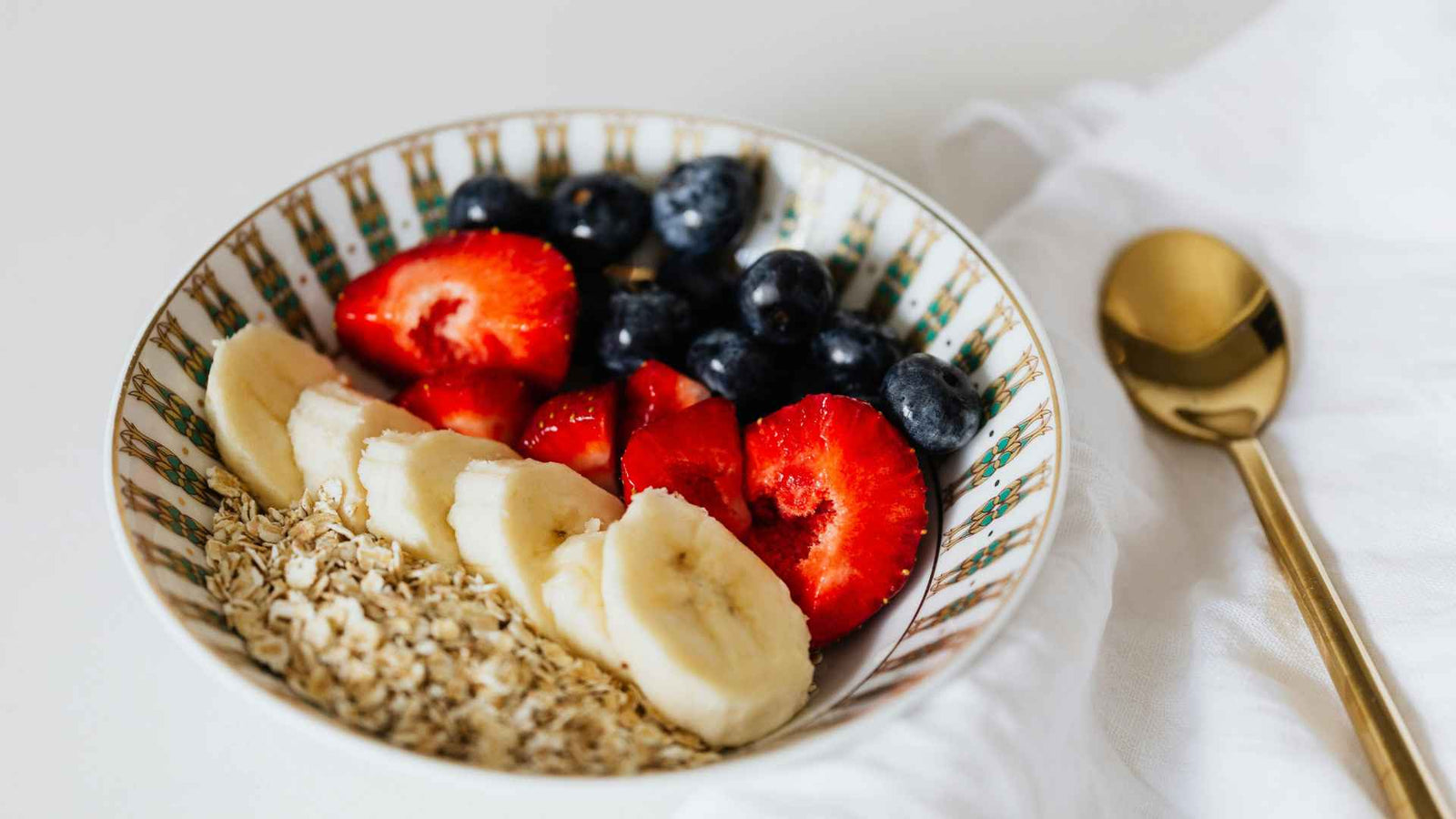
-60 g oatmeal about 6 g
-100 g wholemeal bread about 7 g
So you either need very high-fiber foods, large portions or both. And this is where things often get difficult in everyday life.
Free download: Fiber reality check
3 daily examples with specific foods, quantities and fiber calculation
👉 Download here: https://cdn.shopify.com/s/files/1/0909/3362/5163/files/Arktis-BioPharma-Realitaetscheck-Ballaststoffe_compressed.pdf?v=1770567719
Detailed blog article on the topic of dietary fiber:
Why your gut needs more fiber than you think
https://arktisbiopharma.ch/blogs/magazin/ballaststoffe-darm-warum-zu-wenig
Still need some support?
If you want to supplement your diet with well-tolerated dietary fiber:
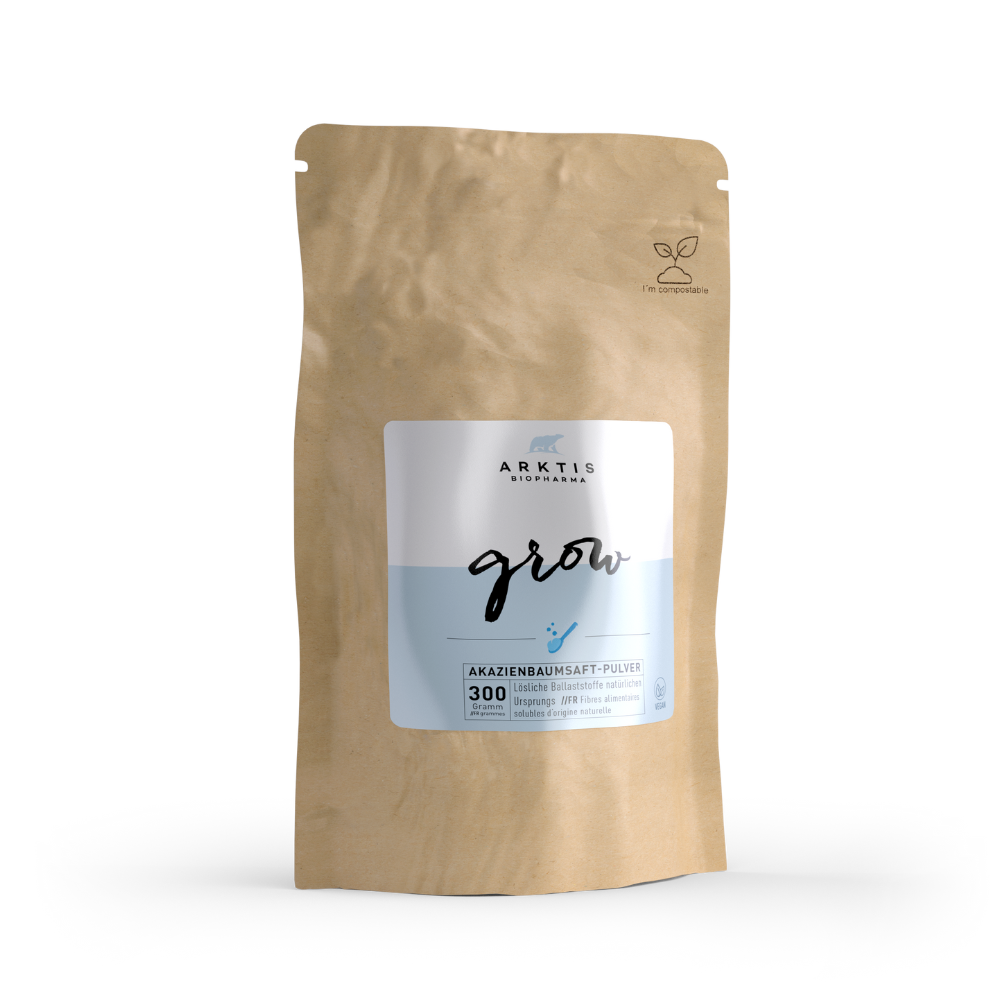
-Acacia fibers as a well-tolerated, slowly fermenting source of fiber
https://arktisbiopharma.ch/products/akazienfasern-pulver-ballaststoff-grow
- 2'-Fucosyllactose (Feed) as a targeted prebiotic for certain intestinal bacteria
https://arktisbiopharma.ch/products/feed-2-fucosyllactose-90g
As a podcast listener, you will receive a discount on our products from us
A 15% discount on your first purchase (applicable once, only on products not already discounted). The voucher code is valid in both Arktis BioPharma stores in Switzerland and Germany.
Enter the voucher code podcast15 before completing your order.
Arktis BioPharma Shop Switzerland
Arktis BioPharma Shop Germany
Subscribe to the Darmglück podcast and follow us on social media
You don't want to miss any future episodes and/or want to stay up to date?
Then subscribe to the Darmglück podcast in your favorite podcast app and follow us on social media.
Here are the links to my podcast in the most popular apps and to Arktis BioPharma on social media